What Daniel Naroditsky Taught Me
Daniel ‘Danya’ Naroditsky passed away on October 19th 2025. The son of Soviet immigrants, he was born and raised in California – growing up bilingual in English and Russian. He learned to play chess as a child and quickly developed into a prodigy, achieving the Grand Master title at age 18. After playing at a high level for several years he pivoted to study at Stanford University, attaining a degree in history. Despite not competing at the absolute pinnacle of classical chess, Naroditsky retained a reputation as one of the best rapid and blitz chess players throughout his life.
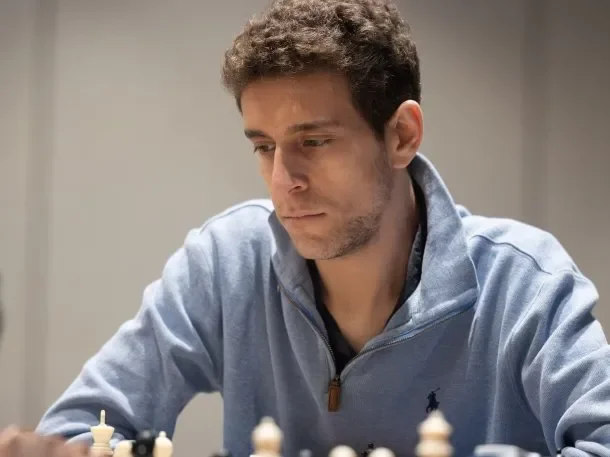
You will find more complete obituaries from those who knew him better and more intimately. I’m severely unqualified to talk about his style as a chess player, any of his famous games. But his life and death had a deep impact on me personally and if I didn’t write something about him then I don’t understand why I have a platform.
Know that I am not good at chess. Technically I’m in the top 3% of players on chess.com; that still makes me quite terrible at chess. I learned the rules at a young age but throughout my later life lacked interest in playing. My biggest barrier was the scarcity of tangible benefits. It’s hard to improve, takes up vast amounts of time and mental effort, and provides no monetary and limited dopamine or prestige reward for success. In poker circles the slogan for why we prefer a more emotionally punishing game is “no one gets rich playing chess”.
It was to my surprise that as my absorption in poker declined and a Covid lockdown set in that I picked up chess and attempted to improve with unprecedented vigour. I wasn’t alone, the worldwide explosion of interest during the chess boom of 2020 generated a vast gap for content creators and personalities around the game. Many chess influencers would take aim to exploit a dopamine deprived audience; a by then tried model that generates the most views and hence revenue. I was drawn to Naroditsky’s channels for his more considered, slower and lacking frills approach.
After his passing I am amazed to discover that Danya was the only content creator who I both subscribed to on Youtube and followed on Twitch. I’ve got 15+ years on each site, time enough to go through several major obsessions. Those platforms are efficient media delivery mechanisms allowing total immersion in whatever recent fad grabbed me. Yet over the last 4 years I’d somehow only picked Danya to watch religiously.
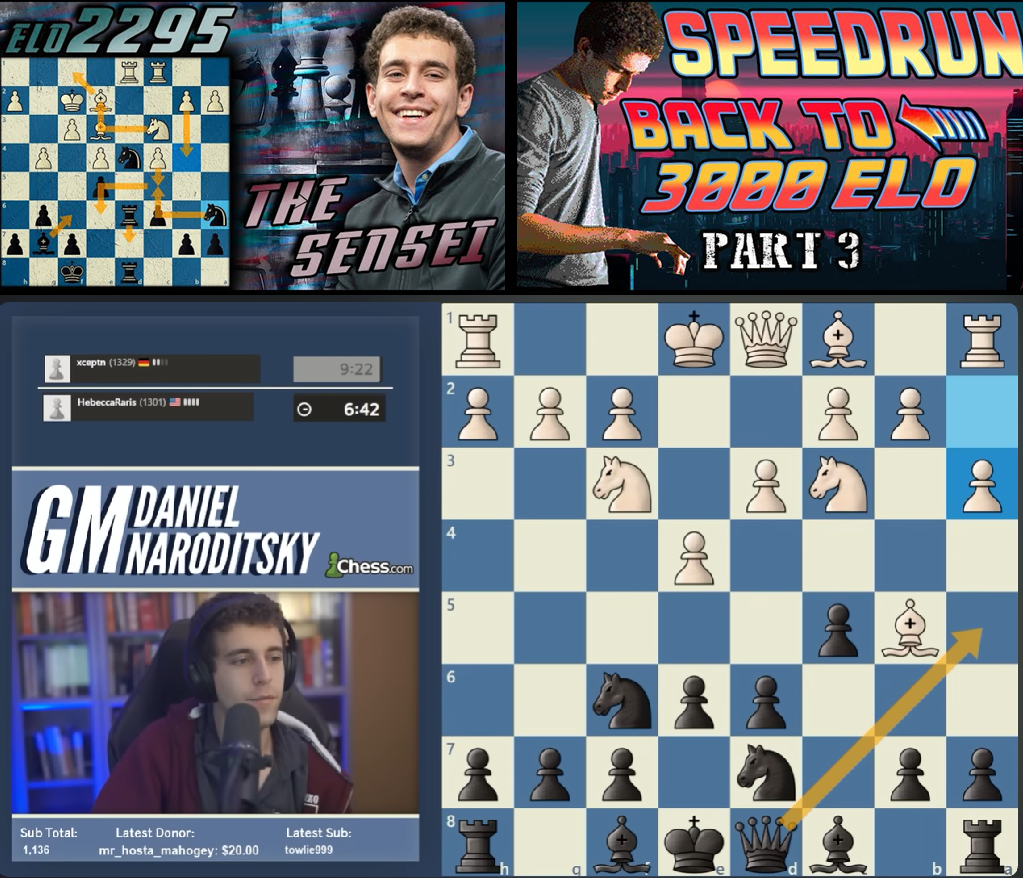
I don’t want to understate the scale of my consumption. For me, the best prestige TV show to grace the air in my lifetime was Breaking Bad accompanied by its magnificent prequel in Better Call Saul. Put all 10 seasons together their total runtime is 6600 Minutes.
Over Naroditsky’s four biggest series of “speedrun” videos on youtube there are more than 12,400 minutes of content. I’ve never fully rewatched Breaking Bad. I’ve rewatched at least half of Danya’s speedrun videos.
Let me be clear, his content was not throw-on-in-the-background light viewing. Watching his videos you’re getting a crash course in how to improve at chess. It’s more akin to watching a Physics lecturer solve basic problems so that you might become a slightly less rank amateur. Remember I recognise that chess has no practical use to my life, what on earth was I doing spending all of my free time watching this?
Sure I enjoyed advancing in chess, I like games and self-improvement and problem solving… but there has to be more appeal to him specifically. I certainly didn’t watch hours upon hours of Ben Finegold, GothamChess, ChessBrah or Eric Rosen content.
“The great thing about chess is it’s a game for oneself. You don’t work on what you can’t control, you just work on yourself. And I think if more people did that, we’d all be a lot better off.”
Finally I arrive at a topic I feel qualified to talk about. After consideration (and rewatching another few hundred hours of his videos) I’m certain that I’ve never had a better teacher than Naroditsky.
Chess is a perplexing game that defies trusted concepts like the Adult Learning Model I’ve used to hone other skills. Grand Masters who try to teach uneducated viewers will frequently be hamstrung because they have no ability to explain what they see. Their many thousands of hours practicing leaves them unable to say more than “I’ve spotted a tactic” or “Knight E4 is clearly good here”. While this creates videos that demonstrate their immense talent, it won’t make you any better.
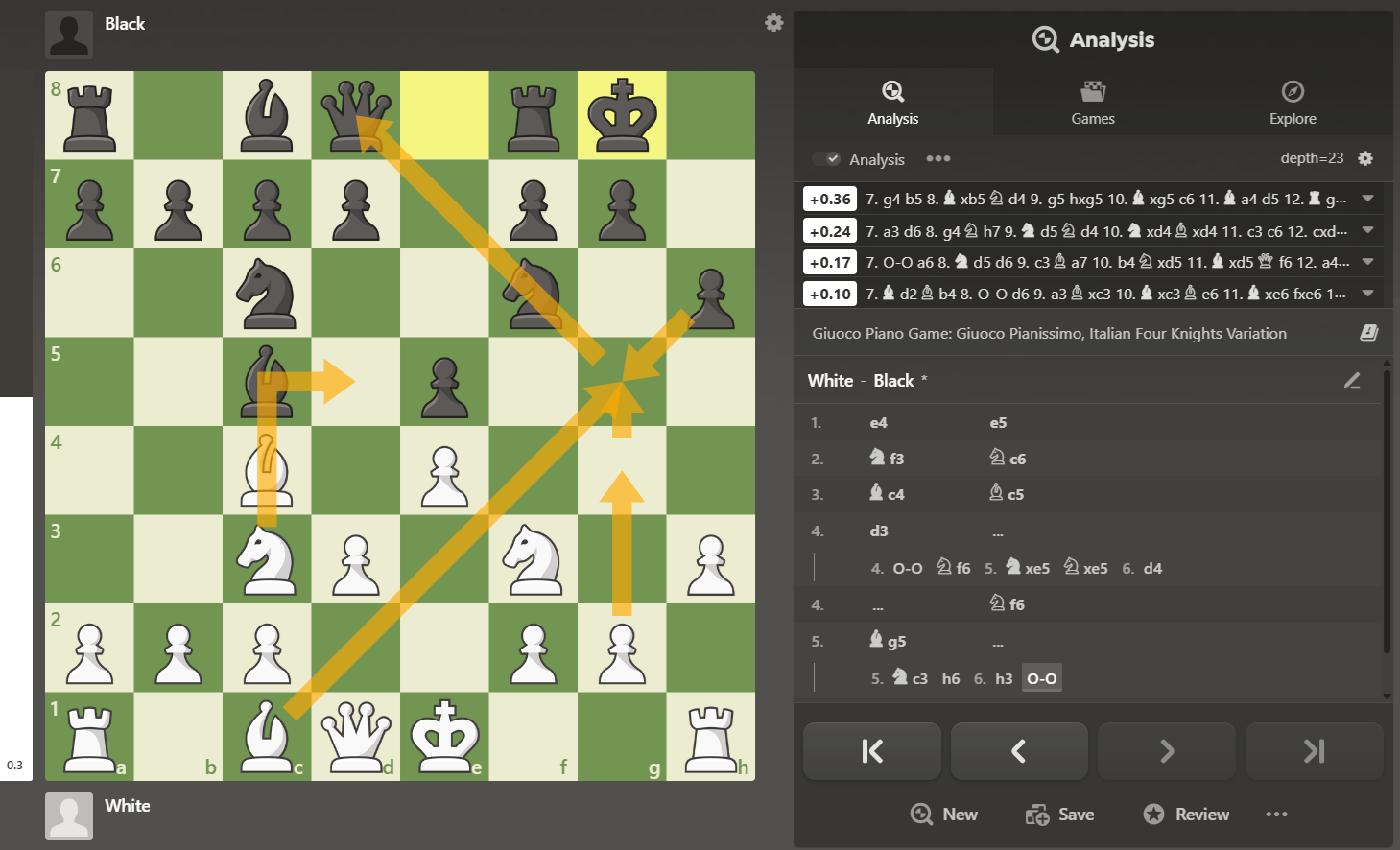
Meanwhile Naroditsky spent huge effort trying to understand what students were struggling with rather than showcase his own skills. “Try to visualise”, “keep calculating”, deliberately long pauses to allow viewers the space to work out something that to him would be instantaneous. Advice such as “set this up on a board at home if you’re struggling” and “if you have a hard time converting these types of positions then right now you should play it out against the engine” are actual wisdom for those looking to progress.
Danya’s character shines out of every word he speaks while communicating on chess. His energy, excitement and enjoyment of the game transcended the limitations of a one way conversation and filled me with empathetic positivity to learn more.
His wasn’t a hyperactive, cynically designed animation constructed to generate engagement, there was true passion leaking in from the identity underneath. It’s visible in most cases that Danya is restraining himself from letting loose all of his exhilaration while playing and talking about the game. My belief, entirely unverifiable, is that in contrast to other content creators; Daniel did not care about how many viewers or views he racked up, he just wanted to spend his time teaching chess.
This article would triple in size if I were to talk about his influence he had on my chess game. Nevertheless, concepts I only know because of him: The Centre Fork Trick, Schallops Defense, Fishing Pole Trap, Pawn Hooks. My main response to a Sicilian with white is the Alapin or Smith Morra. When playing black facing 1. D4 I solely play the Kings Indian. To the more chess savvy reading this, that’s all basic stuff, to the layman it’s nonsense. I learned it all from Danya.
Every viewer will cite his plethora of enjoyable phrases that kept you engaged while learning. Paper tigers, bishops biting on granite, one-move-itis, loose pieces drop off, type 2 undefended piece, reroute via frankfurt airport, russian schoolboy moves, bad bishops defend good pawns, prophylaxis. It’s madness how naturally I mutter this lexicon to myself. They might not be as immediately gratifying as Levy Rozman screaming to sack the rook but they’re a damn sight more thoughtful.
“Concrete considerations always take precedence over general principles”
Naroditsky wasn’t just a fan of the constructs and theory, his interest in the game extended deep into the history and culture. He had a borderline encyclopaedic knowledge of important figures throughout the history of chess. He’d constantly pull out first editions from his book collection to demonstrate where a concept first evolved from. This wasn’t a constructed teaching syllabus where he’d considered what techniques might generate engagement from the viewing audience. He had genuine excitement to share what he knew.
His own constant curiosity and drive to learn were where I found the most inspiration. As he’d reach the higher ends of his speedrun series the chess concepts discussed would be far too advanced for me. I’d still watch because there’s pleasure in watching someone else find joy in advancing their ability, particularly when it’s evidently engaging their very core. Many chess players’ interest burns out as they hit their late 20s. Technically by this point you’ve hit your skill ceiling and constant study and play since childhood can leave a bitterness and tiredness that’s all too apparent. From everything I saw, Danya wasn’t remotely close to losing any of his passion.
“We’re going to review this game because there are still several instructive moments here.”
What I see when watching Danya’s videos is true authentic enthusiasm. With our culture of manufactured overreaction and falsified hyper-energetic personas it’s difficult to spot nowadays. Watch carefully and you can catch the moments when suddenly he isn’t creating content any more, he’s enraptured, fully immersed into the concept or game. That’s when you can see his true self.
Asked recently by a friend “What are you looking for in a partner?” my only answer was “They need to be passionate.. about something”. I have an abrasive personality and enough social anxiety to make me appear brusque and uncaring. However, converse with me about a topic that lights up my brain and you’ll see the sincere passion inside of me I otherwise struggle to let out. For a little while I can drop the pretenses, the protective barriers I construct around myself, and let out the childlike innocent animation stemming from my cerebral interests. It’s these flashes of raw character that allow me to form meaningful relationships, both when I display them and when I observe them from others. There’s an emotional intimacy gained from witnessing someone give into their intellectual excitement no matter the topic.
Less repressed and introverted readers probably won’t understand why it’s a big deal to catch glimpses of someone’s underlying character. They struggle less to present their innate selves to the world. They’re also probably at a Karaoke bar rather than reading a eulogy for a personality from the least extroverted subculture in existence.
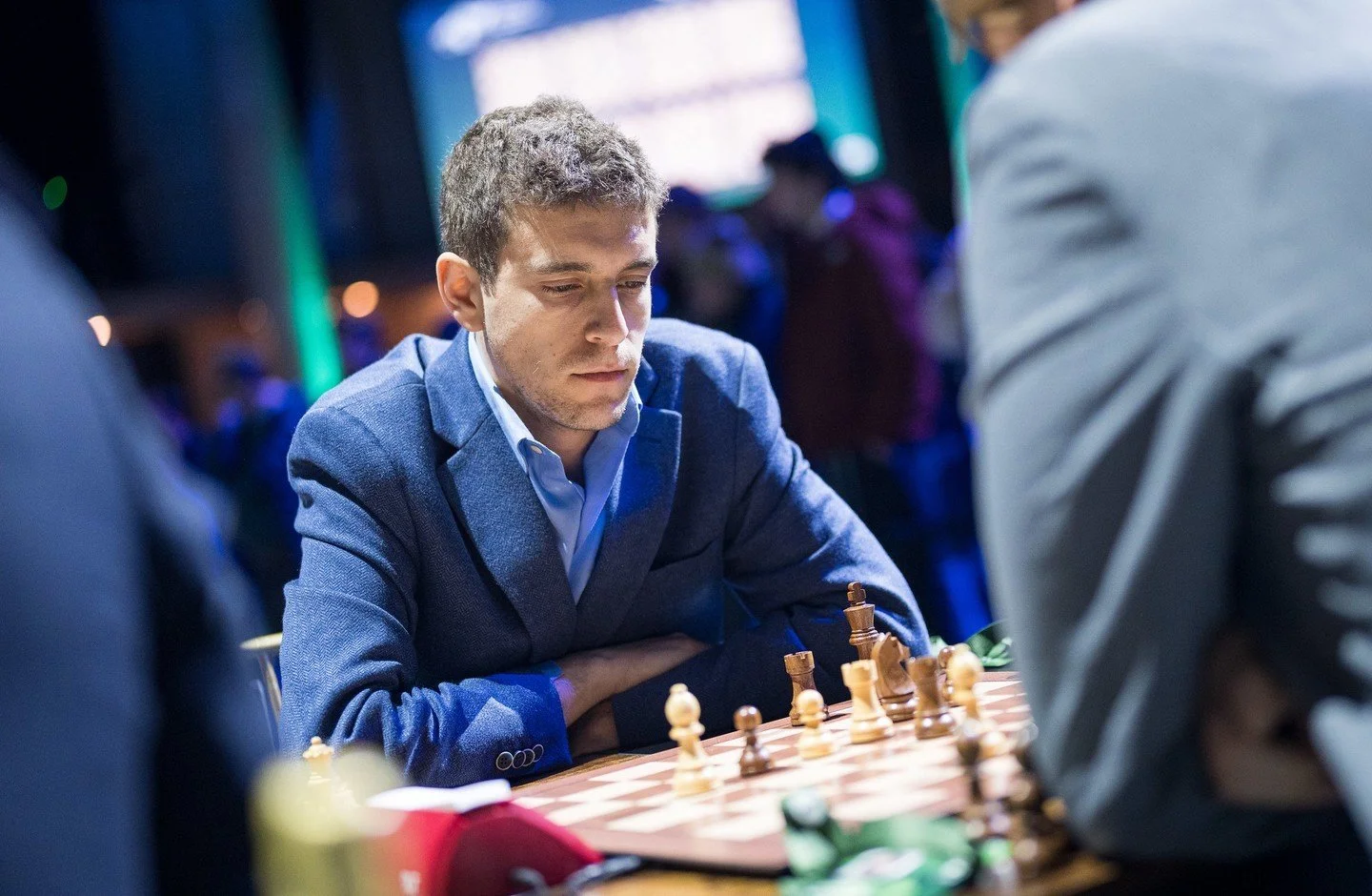
Let me be clear, I didn’t have a parasocial relationship with Danya. He wasn’t my friend, I don’t know him any better than any other viewer could. I did briefly entertain the idea of hiring him as a chess coach, his reported price tag of $500 per hour put off this merely curious amateur but seemed like great value for a younger aspiring player to receive his tutelage and have his character influence their development.
On my best day I’m not 1% as enticing as Danya was, but I now recognise that I let his style and mannerisms dictate so much of my personal growth in the last 5 years. Watching him explain concepts impenetrably complex to novice viewers, concepts that to him are beyond obvious and that he grasped before the age of 10; I can hear myself at work training a new employee or presenting to a committee. His pacing, intonation, and slightly forced delivery sound like me. Or rather, I sound like him.
“Ask me if I care, because I do not.”
One thing that isn’t missing from others’ obituaries for Danya is testament to his eloquence and lyrical composition when commentating on chess. He stands so uniquely here because if you’ve watched a Grand Master give an interview you’ll know how rare it is to find one that can communicate a point without mumbling or appearing rude. The skillset of high level chess does not often accompany the ability to express oneself clearly about a matter that might exist outside of a checkered board.
And all I’ve said so far is great. What a magnificent person Danya is! I could have written the above article at literally any time.
But now he is gone. He leaves a gaping hole in the world of chess for me and countless others. I’ll only cursorily mention the reasons for his death. His family chose not to disclose details and I’d like to honour his life rather than focus on the tragic ending.
It’s clear that the entirely unfounded accusations levelled at him in the last 18 months had a devastating effect on his mental health. I have a vehement distaste for Vladimir Kramnik and others who attempted to tarnish his reputation, not to speak of the silence and inaction from significant figures in the chess community following the bullying.
However, none of these individuals can be held accountable for Danya’s passing. I truly understand why many wish to lay blame at their doors; grief and loss create a hole that is impossible to fill and it’s easier to target an anthropomorphisation of innate evil towards whom we can feel hatred rather than sit with our own sadness. Fairytales have clear cut villains and fantasies will always be easier than reality.
“Remember, our opponents are allowed to find good moves too”
Instead of the fantasy, I’m forced to live in the surreal world where someone I revered is no longer present, yet I can watch him at any time, anywhere in the world. I’m required to eulogise a man more than two years my junior rather than be excited for his next performance.
Nothing eclipses the surrealism of how I learned of Danya’s death. Given my attempts to cut out mainstream news media from my life, a poorly written BBC article early in the morning of the 20th October felt like a cruel joke. A testament to his reach and impact not being uniquely mine, the article stayed in their top 10 most read for over a week (after a full day as their most read story, the BBC were embarrassed enough to rewrite a proper fact-checked piece).
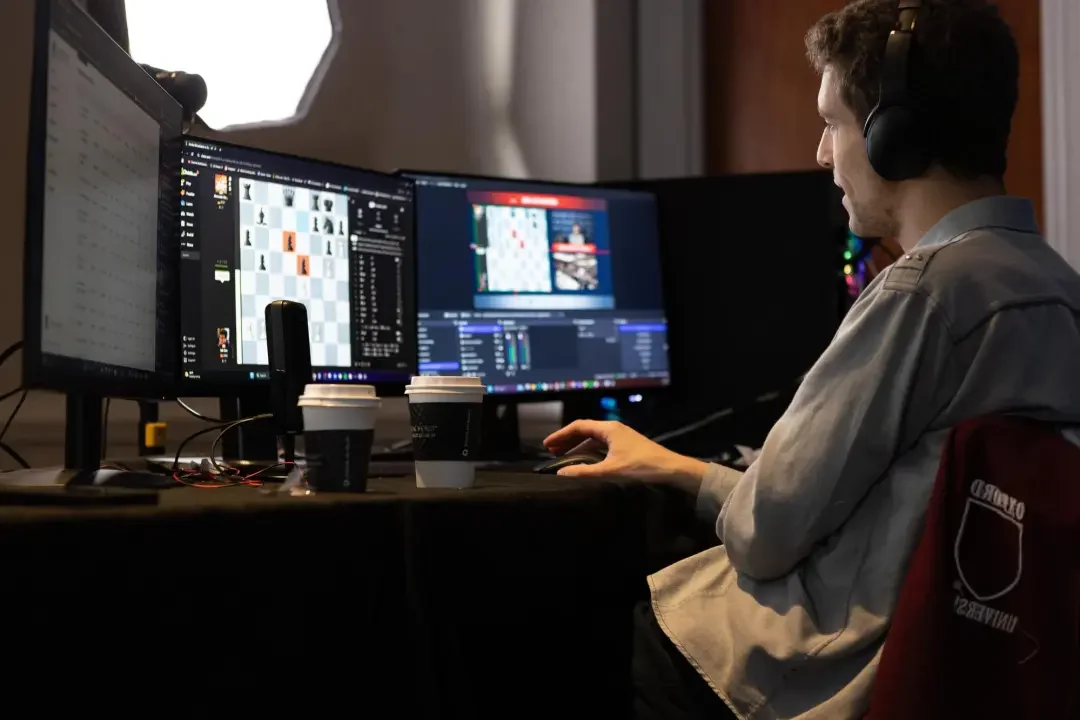
I think where Danya’s passing hits me hardest is the fear it creates for my own aspirations. Danya wasn’t just brilliant minded; he was humble, self-aware and introspective. I’ve long since craved to develop all sides of that particular coin. I have no appetite to be amazingly successful if it means inflating my ego to the point where authentic connection is impossible.
I look at other people who I saw as role-models of both qualities: Philip Seymour Hoffman, David Foster Wallace, Aaron Swartz and a terrifying pattern emerges.
Perhaps the triple constraint of brilliance and self-awareness is actually longevity? The internal pressure of being incredible while retaining human compassion and perspective might be psychologically tortuous beyond our knowledge. I sincerely hope not because I will continue to admire those who embody such characteristics.
I’m yet to process my full emotions at the loss of Danya. Writing and posting this is an attempt to crystallise my mind and ground me to the horrible reality without his physical presence.
I’m gutted that he is gone. I will continue to be thankful that I have over 300 hours of incredible chess content, created by the most fantastic and exuberant teacher. I know I will continue to learn from his videos and never stop finding inspiration from a man who exuded authentic passion for his vocation from every pore.
“With chess, it was almost this palpable electricity that I felt. You’re totally in control of your own fate. There’s no luck factor. It’s you and the pieces.”
Rest in Peace