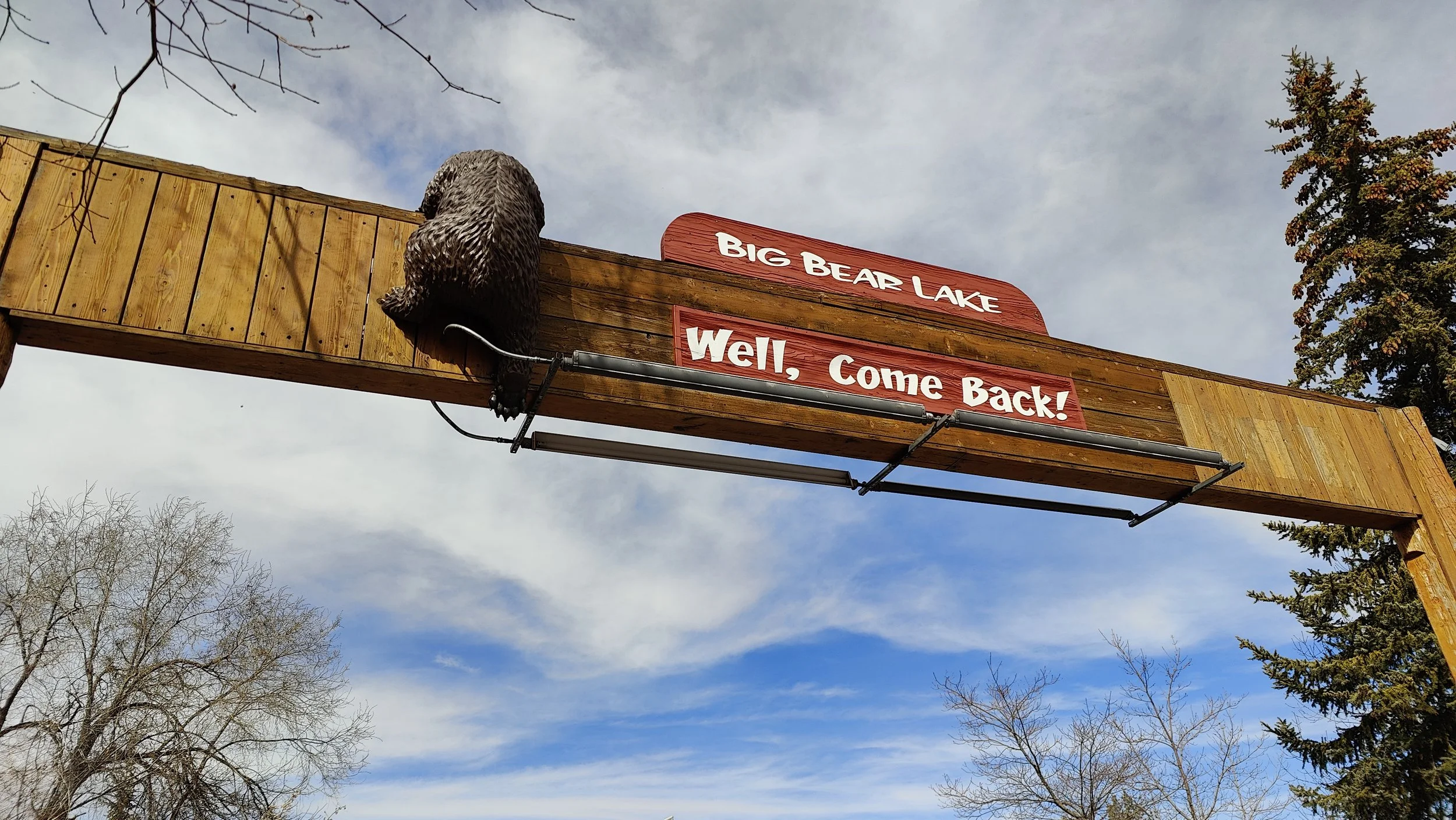
Big Bear Lake
Eight March nights alone in the city of Big Bear Lake, Southern California. The idea was to escape connection, to switch off from the constant noise emanating from my smartphone. Allow myself to hear some of my thoughts I’d prefer to drown out.
The original proposition had me visiting a secluded wilderness outpost or camping in a tent; no human soul for miles around and no chance of mobile phone signal. Given a week in such remote circumstances I would exist entirely in survival mode, terrified that every noise I heard was a bobcat or serial killer. My mind would be constantly fixed on the next time I’d need to build a fire, cook my meal, fetch water from a well. There would be no capacity to drive my thoughts inwards, let alone journal or write. I would have actively counted the hours until I was permitted to rejoin civilization at which point I’d have immediately grabbed my phone and laptop.
Instead I opted for the relative metropolis of Big Bear Lake, a typical ski town an hour’s drive North East of San Bernardino. Ski season was closing and the price of a cabin was down yet the weather was not hot enough to infest the area with bugs and families. I settled a mile outside of the main village in lodgings that, while not free of challenges, removed enough of the burden of the bottom two levels of Maslow’s hierarchy of needs that I could freely structure my days. I had food supplies to last me the full stay, put sufficient blocks on my devices to restrict me from watching the news 24/7. I wasn’t exactly isolated, there were at least 50 similar cabins within immediate access. On any trip out I’d see a mixture of locals and a revolving cast of tourists seeking much the same as me. But it was peaceful, quiet, proximate to nature. It really did give me space to think.
Initially I filled this space with reading, writing, journaling, hiking the surrounding hills, cooking my favourite meals and diligently ticking off each of these tasks so I could reward myself with screen time in the evening.
I know better than to set the goal of “think about yourself”. That solipsistic exercise, as well as feeling disgustingly narcissistic and masturbatory, rarely leads to progress or discovery. Far better to let my mind get hopelessly bored of the novel I grabbed or arduous hike I picked and see what thoughts manifest.
I've never liked looking inward, which is maybe why the first thought to surface — and lodge like a popcorn kernel my mind's tongue couldn't leave alone — was "Why is it called Big Bear Lake?".
This is a question a young child wouldn’t have the temerity to ask their parents; the answer should be obvious. Apparently I’m dumber than said child because semantically I wanted to know specifics. As a child I routinely tortured my parents with these deep but pedantic questions that can now be answered via the internet.
Was it named after a specific big bear? Was it a lake that had bears and the lake was big? Was Big Bear a character from either historical or mythical indigenous tale? Was it perhaps not the size but abundance of bears that it was deemed to have a ‘big bear’ presence and so known?
I was trapped by the endless possibilities, I couldn’t sit still and reflect internally, my focus aimed at the more tangible topic of my locale. I decided to explore the village, with the excuse of purchasing postcards. I could write these and then send them using the post office, thus creating further loopholes to escape inward reflection.
It was during these trips when I realised Big Bear Lake isn’t a typical town at all.
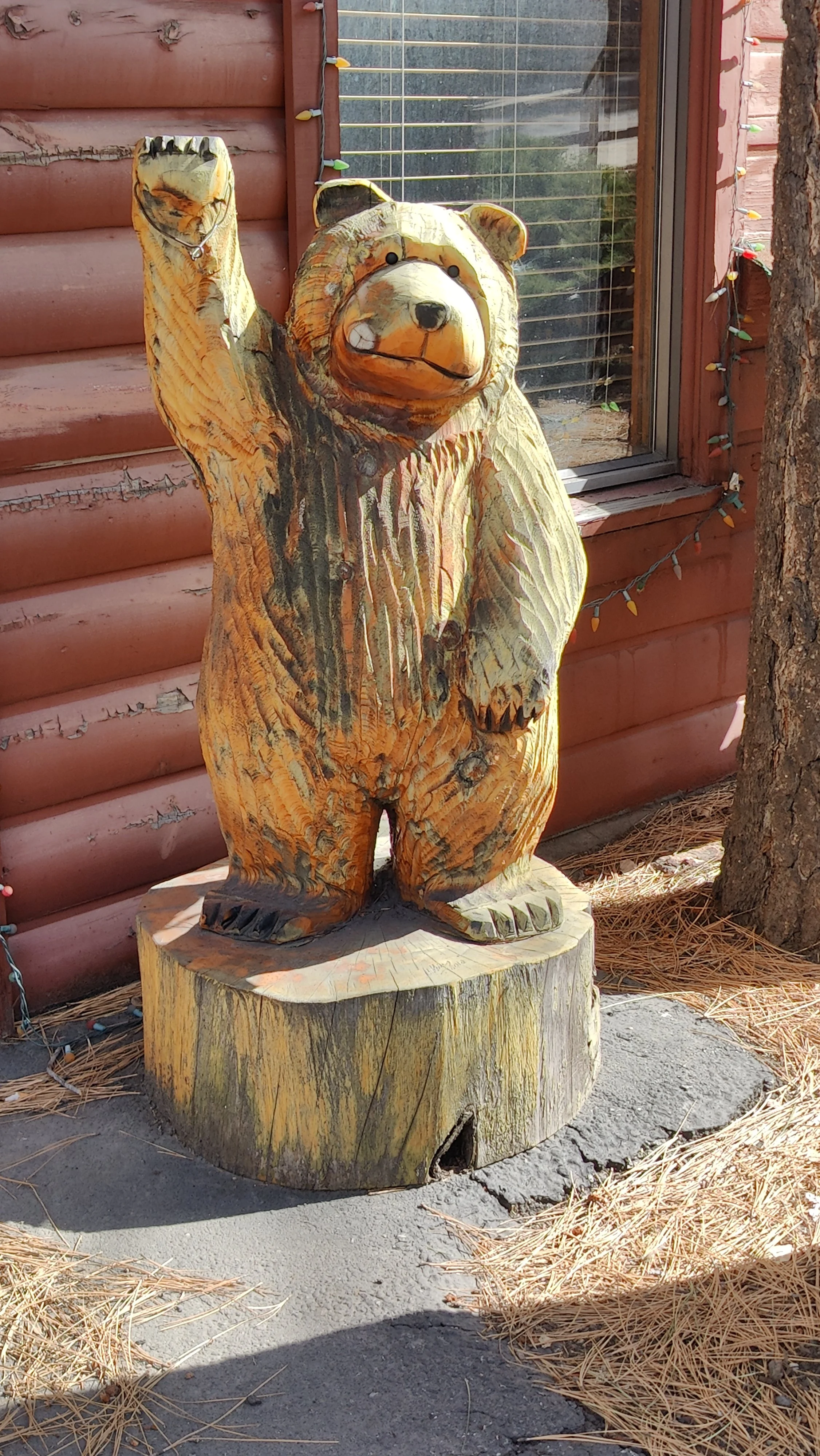
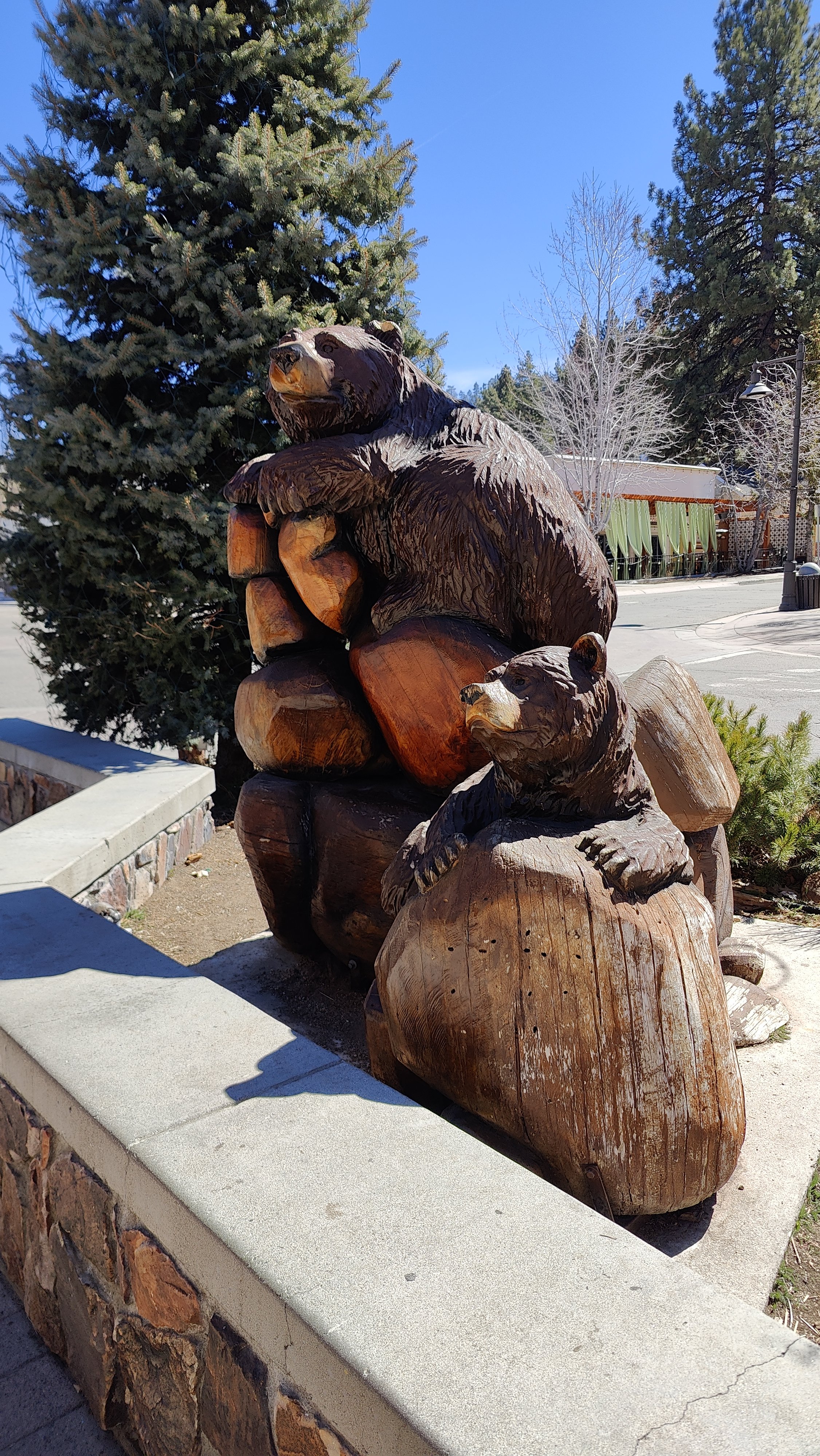
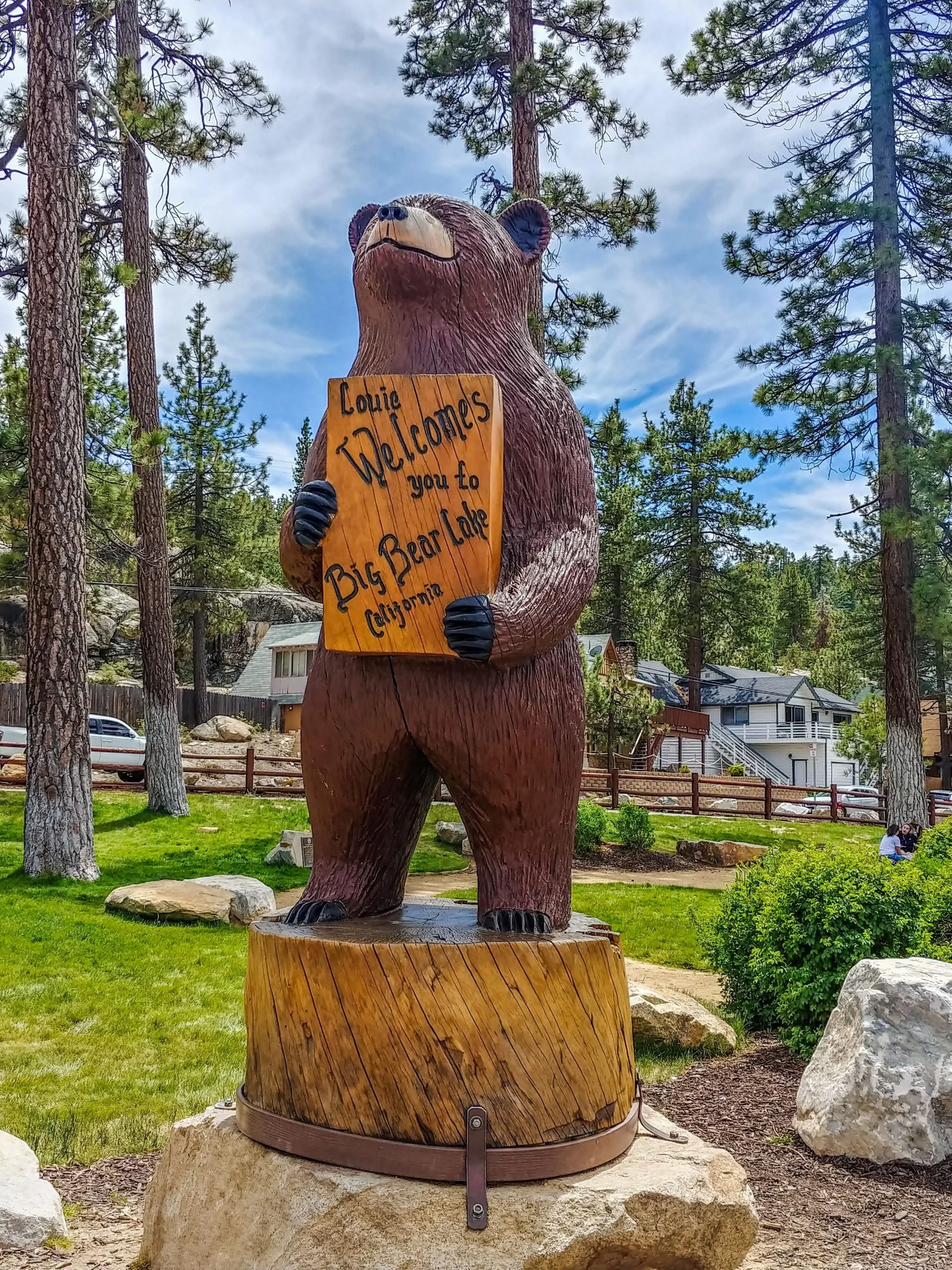
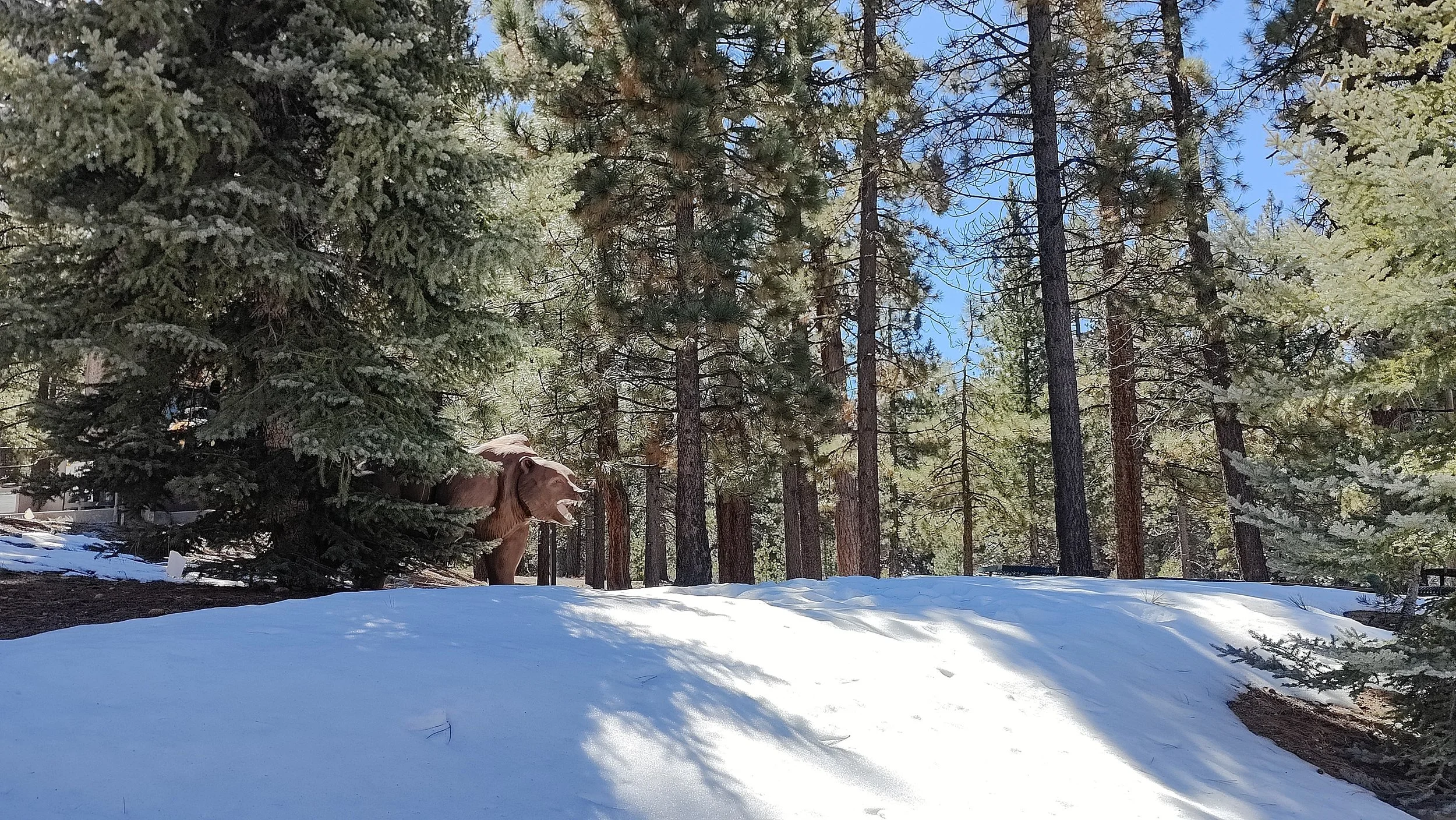
Big Bear Lake is infested with bears. A mile walk into the village presented me with more iconography than the Catholic church can dream of. The kind of religious idolisation a despot of North Korea longs for. I imagine if your home does not present the minimum allocation of one bear sculpture or a bear wood carving into the porch you are regarded as a social pariah. To demonstrate your love for the bear with open celebration is to belong to this community.
Small businesses meanwhile are in a competition to see how many family members of bear statues they can sublet the front of their location to. You can display further your devotion to the church of Bear by shoehorning the word into your business name. A special level of zealotry is attained should you make this into a pun.
A number of these are seamless or intelligently named: The Bear Trap Taproom and Kitchen, Grizzly Manor Café, Bearly Used Books, Bear Essentials. I found myself enraptured with the clunkier: A Beary Good Time Hotel, Beary Bliss Frozen Yoghurt, Bear Skins Clothing Store or the outright confusing: Bear Noodle Bar, Phở Big Bear, Chateau Big Bear, Teddy Bear Restaurant. The English language is only so vast so I doubly applaud the innovative proprietors of Merri-Bear Cabin and Casa de Oso Lakefront Lodge for finding creative new ways to show their love of bears.
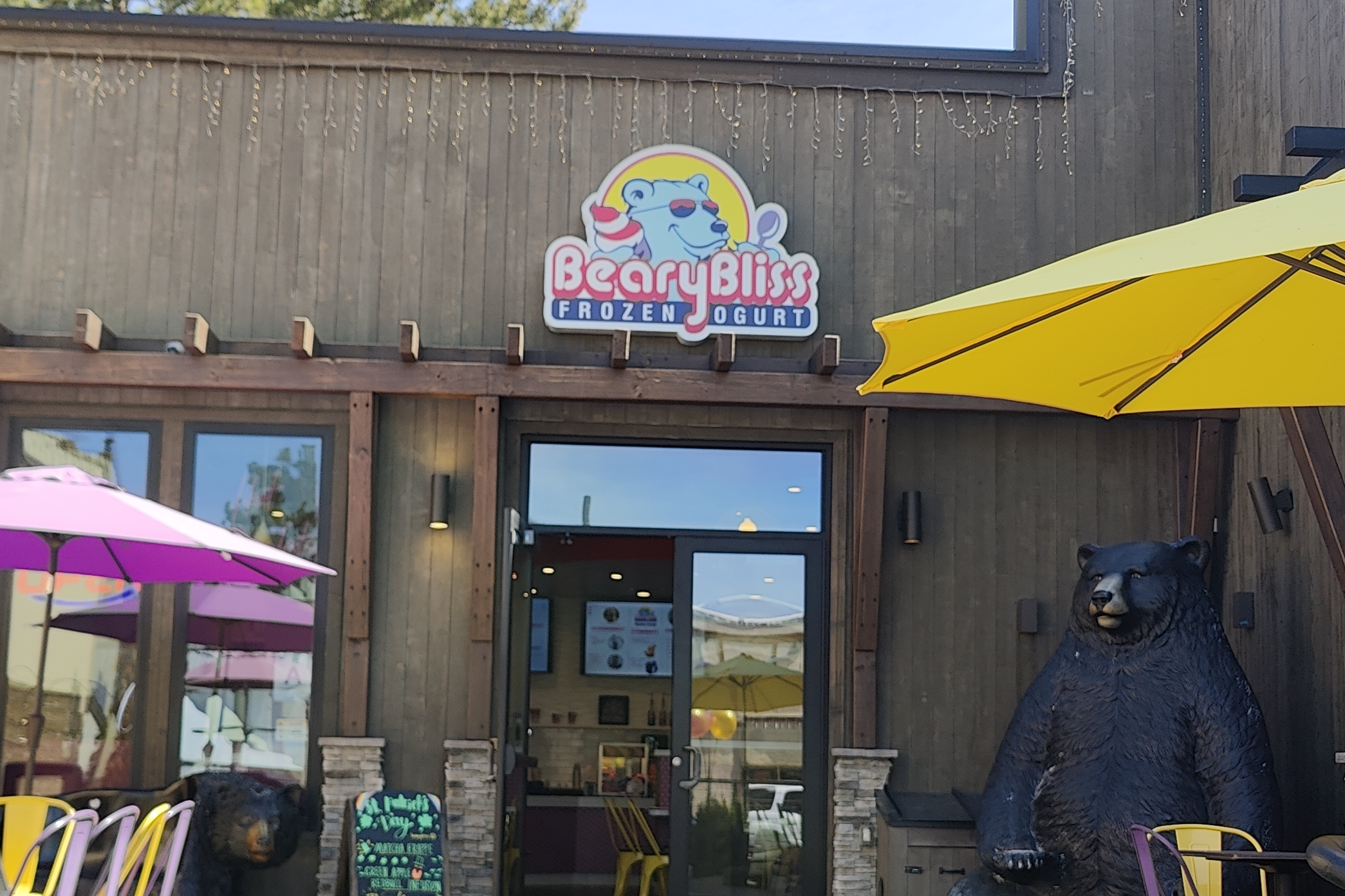
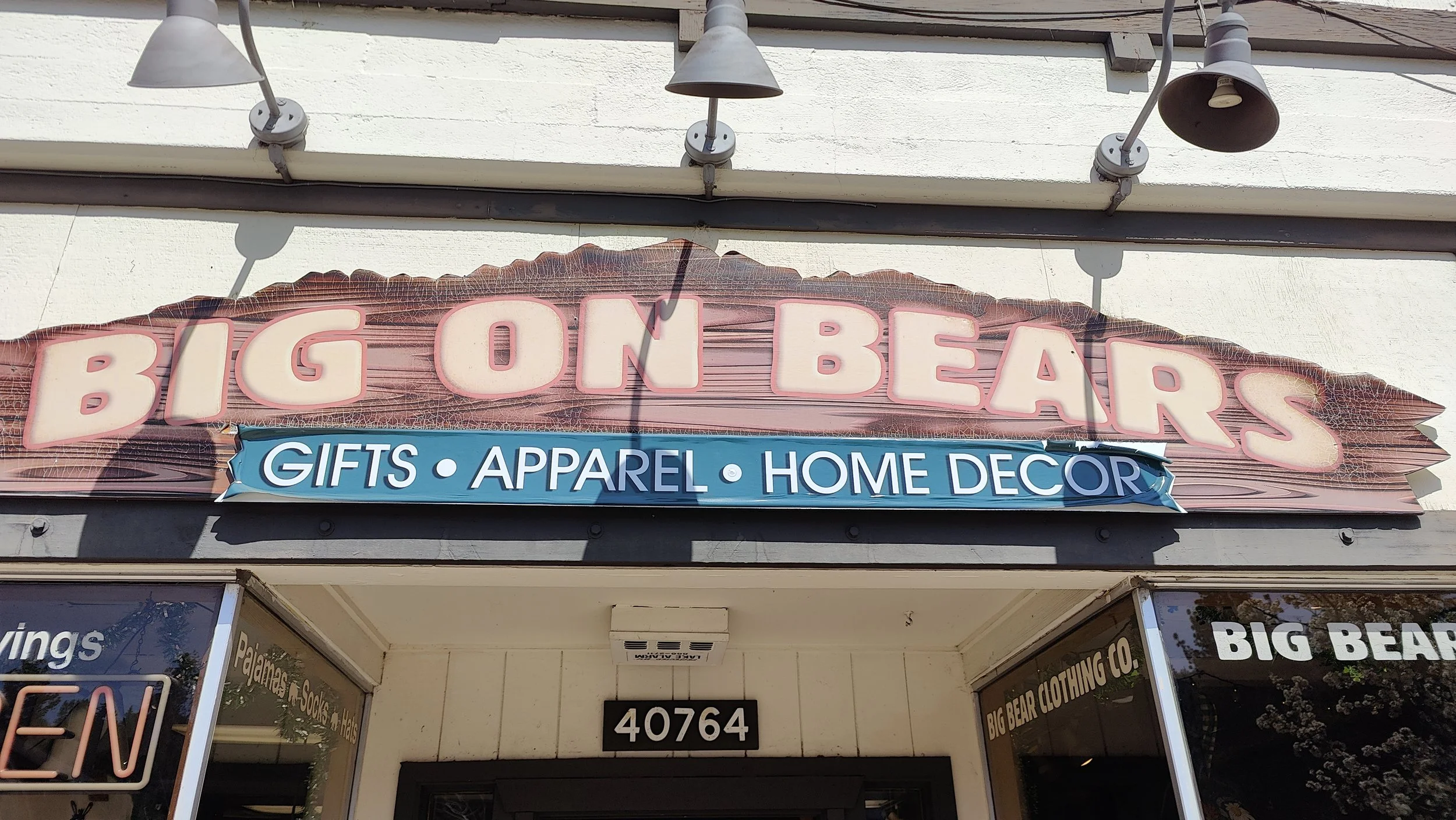
The mission of the townsfolk is to spread the gospel of the Bear as far as they can, they achieve this by ensuring that visitors must leave with a bear mascot. The many gift shops that line the village streets are stuffed with bears, those that are themselves stuffed, or carved from stone, emblazoned onto shirts, postcards, cutlery sets, pocket knives, candles, jewelry.
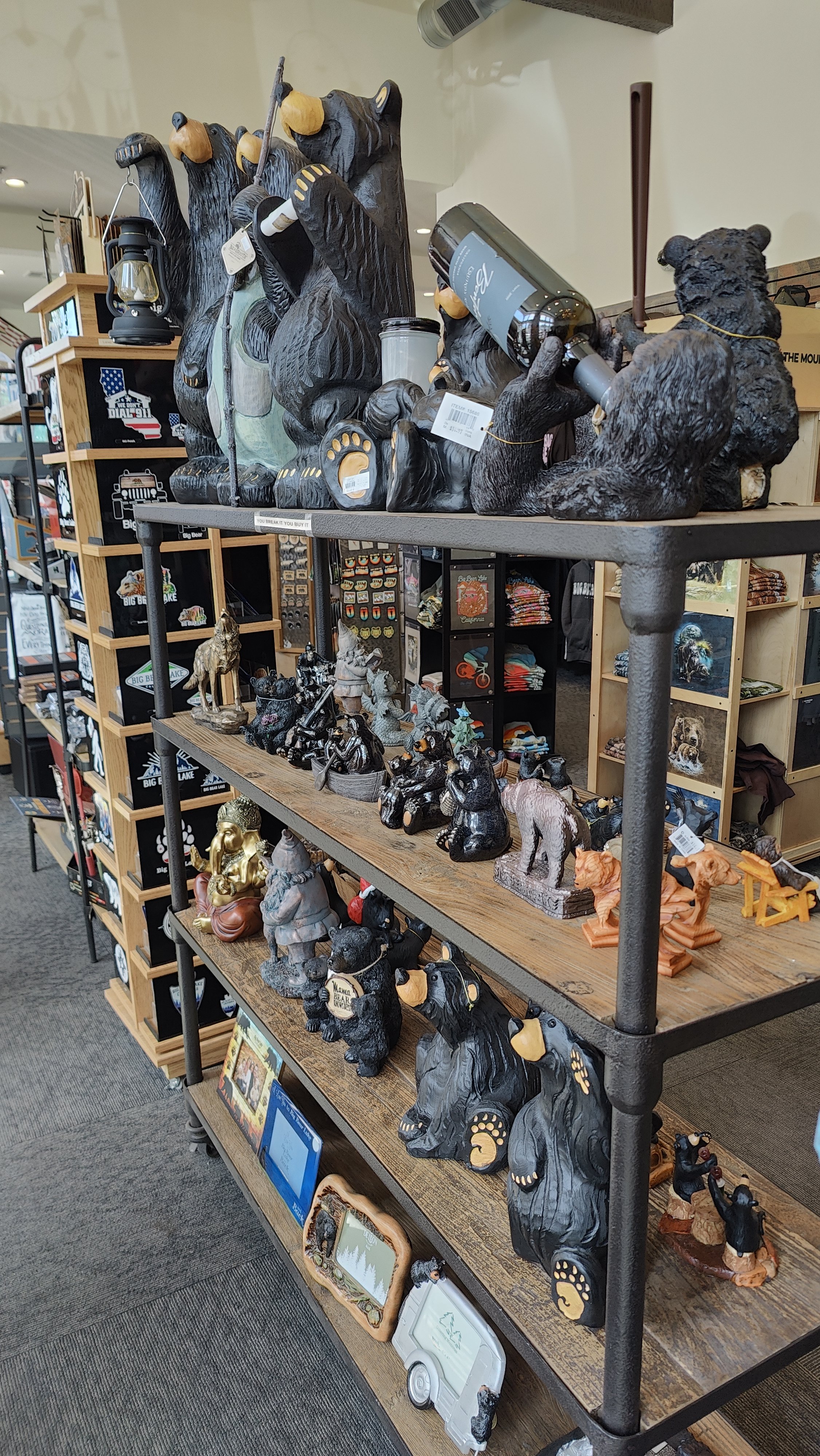
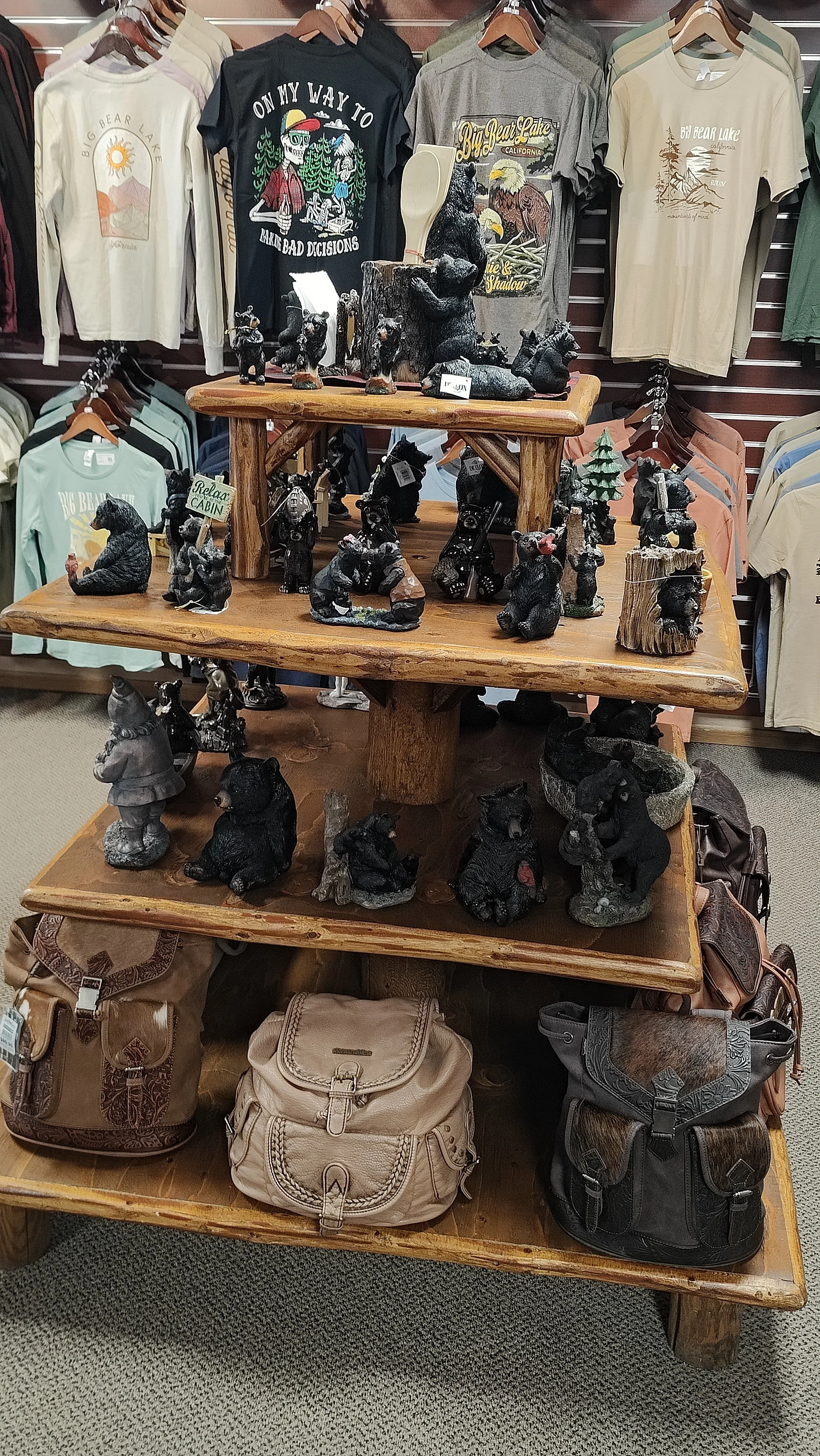
By this point my runaway brain is doing rough counts of how many bears I have witnessed firsthand and extrapolating it by the expected number of cabins and shopfronts I can see on a map.
Although a frequent destination for skiers, the permanent population of Big Bear is just over 5,000. It’s often said that sheep outnumber humans in New Zealand by 5 to 1. At my conservative estimate the bears outnumber humans in Big Bear Lake at 20 to 1.
Wild Black Bear sightings in the surrounding areas of Big Bear Lake are a rarity, there isn’t even one confirmed each year. The last Grizzly bear — of which 99% of all bear merchandise, imagery and sculptures pay homage to — was seen here in the early 1900s.
The obvious explanation is that the adoption of the bear mascot is a cynically capitalist attempt to boost tourism; clearly the dominant industry of the city. But why did the town need to embrace this badge with such force?
Americans’ desperation for cultural identity often manifests in pride to the exact location of their birth. This is apparent upon meeting an American in a different country. They’ll automatically announce themself as a Chicagoan, a New Yorker or even from St Louis. Only if they’re from somewhere less famous — an Iowa, an Idaho — will they ashamedly admit to being just an American.
With this embarrassment at the lack of global notoriety of the place of their birth, comes the social fear that they lack character, their personality is missing a key piece.
This inspires a defensive pride applied to the smallest of locales. A drive through smalltown America greeted me with such incredible stunning placards as “Home to the 2024 State Champion Baton Twirlers”, “The First settlement in Utah in which oil was discovered”, “City with the most waterslides in Western US”. If you can cling to an obscure reason why your birthplace merits consideration, then surely you are worthy of consideration too.
Americans want to believe that their character spawned as a result of their heritage and origination. It is harder to admit that where and how you grew up does not define you, the choices you make are what shapes your persona.
These inane boasts that proclaim your small village as unique are just the tip of the iceberg. The wholly American idea of a “Theme Town” such as Big Bear Lake occurs when a community takes a loose motif to heart. It’s affirming to be a citizen of the town taken over by bears rather than just another anonymous name on the map.
The area of Big Bear Lake is truly stunning in its own right. Hikes deep into the mountains of San Bernardino Forest gave me solitude and connection to nature that I’d been longing for. Snow on the ground, visibly melting in the beautiful sunshine captured me and interrupted my compulsive sneering at the town.
This article was meant to be a fun bit. Somewhere along the way of writing it that stopped being true.
I now appreciate this anecdote originated from the wrong angle. It was in fact my own uncertainty regarding what defines me that embittered me towards a population that adopted a superficial talisman. If all I can find in Big Bear Lake is distaste for a kitschy aesthetic it surely reflects my failure to see beyond the shallowest impression of what I observe. I didn’t visit the Boca area of Buenos Aires and mock the prevalence of Boca Juniors flags, shirts and merchandise.
Perhaps if I hadn’t spent the entire week thinking about bears some internal clarity might have been achieved. I firmly lay that at my own struggles to find identity — the town has no such crisis.
This cognitive round trip only served to remind me to proactively avoid judging the outward aspects that people present to the world. There’s no connection or belonging for the traveller that upon visiting a quirky new locale is constantly internally writing a snarky article.
I can’t pretend to have any idea what the people of Big Bear Lake are like. Even though I enjoy the comic ideas, I doubt they’re as bought into the bear cult as the sardonic part of my brain wishes they were.
I wouldn’t know. I didn’t converse with any of them for my whole stay. I have never needed to travel to a remote location to isolate myself.